World Cup 2026: The Geometry of the Game
The most-watched event on earth is also a geometry festival. Strip the tournament of its logos and anthems and what remains is a set of beautiful mathematical objects: a polyhedron you can kick, a ruled plane of arcs and rectangles, a mesh that holds its shape by sagging. For the 2026 tournament our house artist drew exactly that layer, the shapes every fan knows by silhouette, with not a crest or a mascot in sight.
The shapes of the game
Truncated Icosahedron
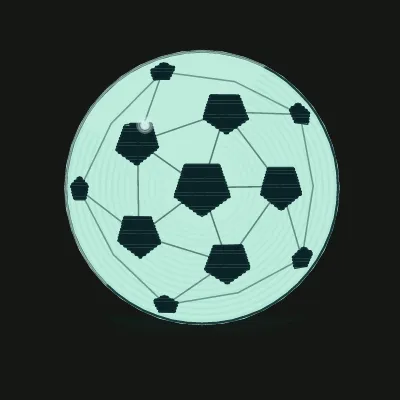
The classic ball is a truncated icosahedron: 12 pentagons, 20 hexagons, and a theorem hiding in plain sight. However you stitch hexagons and pentagons into a closed ball, Euler's formula forces exactly twelve pentagons, every time, no exceptions. The drawing leans into the projection, panels foreshortening as they wrap toward the silhouette edge, dark pentagons doing the counting for you.
Goal Net Mesh
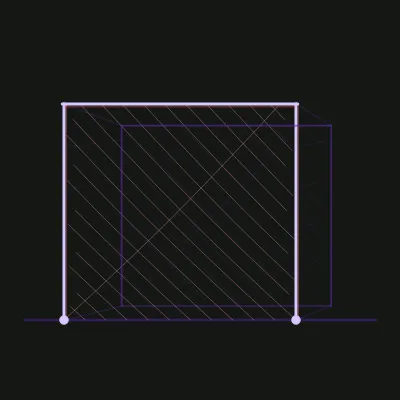
A net is a surface that works by giving up. The mesh hangs in catenary sag between crossbar and ground, diamonds tightening with depth, the back panel kept faint so the front face stays primary. Nothing in the frame is rigid except the posts, which is the whole engineering of the thing.
Pitch Plan Geometry
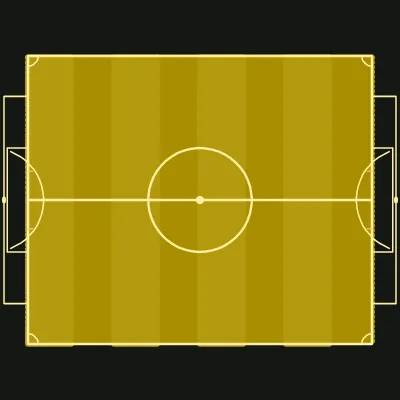
Every pitch on earth is the same compass-and-straightedge construction: touchline rectangle, halfway line, a center circle, two boxes with their arcs, four corner quadrants. It is a drawing the groundskeeper re-draws before every match. Here it sits as pure plan, white chalk over a gold field banded with mow stripes.
Stadium Bowl Tiers
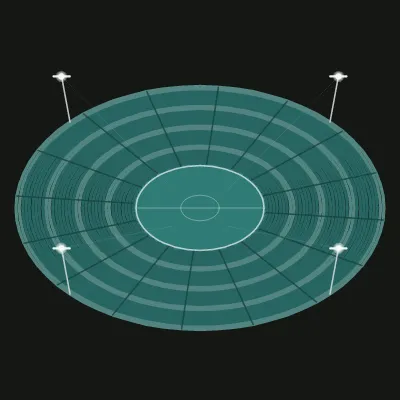
A stadium from above is an amphitheater theorem: concentric tiers stepping up and outward around a central green pitch, radial aisles slicing the rings into sections, four masts leaning out from the rim. Eighty thousand people, one ellipse repeated patiently.
Pennant Bunting
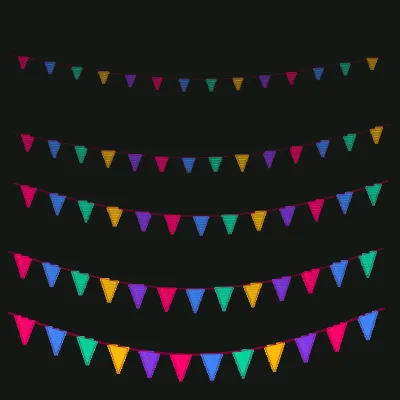
Match-day festivity is its own geometry: strings hung between points fall into catenaries, and triangular pennants ride them at regular intervals. The colors here are solid and belong to no nation. The math of a hanging chain belongs to everyone.
The hero scene
Floodlit Bowl at Night
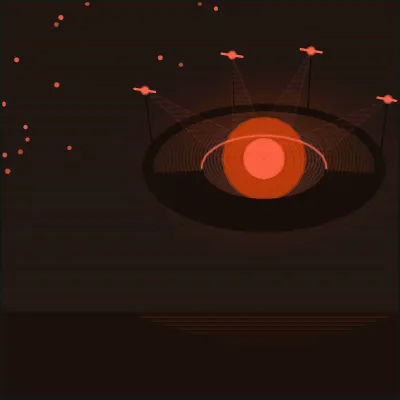
From far enough away a night match is just light escaping a bowl. The rim glow is the single committed light source, four masts lean their cones into it, sparse stars hold the sky, and a dark ground band keeps the glow honest. You have seen this from a highway and known exactly what it was. That is the two-second test, passed at a mile.
Kick one around
None of these are flat pictures. Each is a living composition you can take apart: branch the ball and recolor its panels, hang your own bunting across a different sky, or redraw your hometown ground as a bowl of light. Every remix keeps its credit trail back to the piece it grew from, and the drop stays up through the final on July 19, so the whole tournament is open season on the geometry.