How to Draw a Turkey in Five Easy Steps
A turkey is one of the happiest birds to draw, and with Thanksgiving on Thursday 26 November it is the bird a lot of people are reaching for this month. What makes it read as a turkey is one idea: a round body standing in front of a half circle fan of tail feathers. Put a small head on top with a red wattle hanging beside the beak, and the fan does the rest.
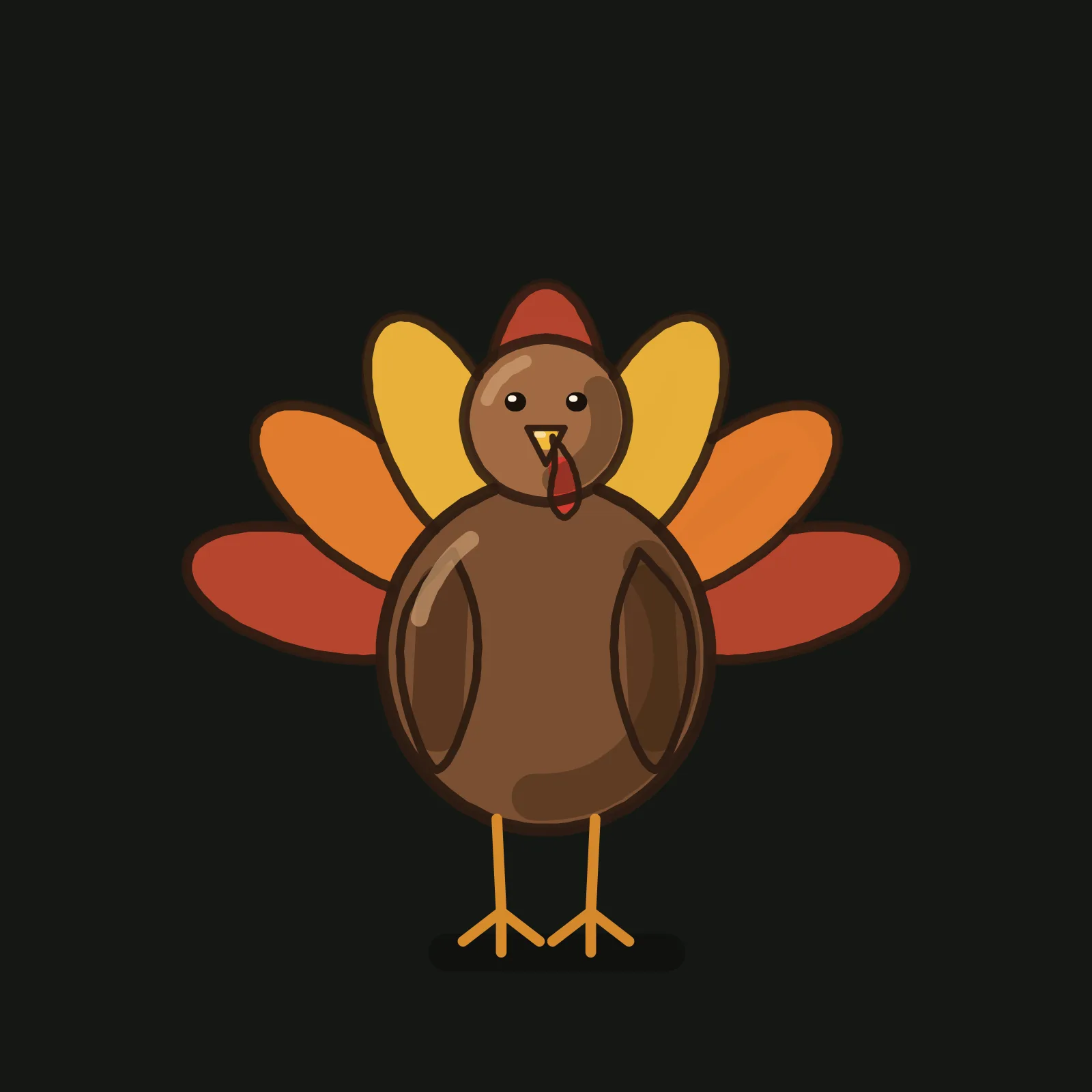
What you need
Everything happens in the Grovetracks editor on the default dark canvas: the ellipse tool for the body and the head, the line tool for the guides and the fan's flat edge, the freehand brush for the outline and colour, and layers. Draw the first three steps on the layer the editor starts you on: that is your sketch layer. In step 4 you add a new layer for the finished drawing, then delete the sketch layer whole instead of erasing it, so no guide takes a bite out of a line you are keeping. Every colour is in the table below, with the hex code to type into the colour picker.
| Colour | Hex | Step | Used for | |
|---|---|---|---|---|
| Grey blue pencil | #93A6BC |
1, 2 | Shapes and guides (sketch layer) | |
| Warm cream | #F2E3C6 |
3 | First outline (sketch layer) | |
| Red | #B5452E |
4 | Outer and middle feathers | |
| Orange | #E07A2E |
4 | Feathers next in | |
| Gold | #E8B03A |
4 | Feathers beside the head | |
| Brown | #7A4E32 |
4 | Body | |
| Darker brown | #5A3822 |
4 | Wings | |
| Lighter brown | #A06A44 |
4 | Head | |
| Beak gold | #F2B83A |
4 | Beak | |
| Wattle red | #D23A2E |
4 | Wattle | |
| Near black brown | #2E1C12 |
4 | Final outline | |
| Near black | #1A110C |
4 | Eyes | |
| Leg orange | #E0902E |
4 | Legs and feet | |
| Dark brown | #3E2616 |
5 | Body and head shadow, about 45% opacity | |
| Pale tan | #C99A6E |
5 | Highlights, upper left | |
| White | #FFF4E0 |
5 | Eye dots and beak glint | |
| Shadow black | #0E0A08 |
5 | Ground shadow, about 50% opacity |
Step 1: Draw a circle and a fan
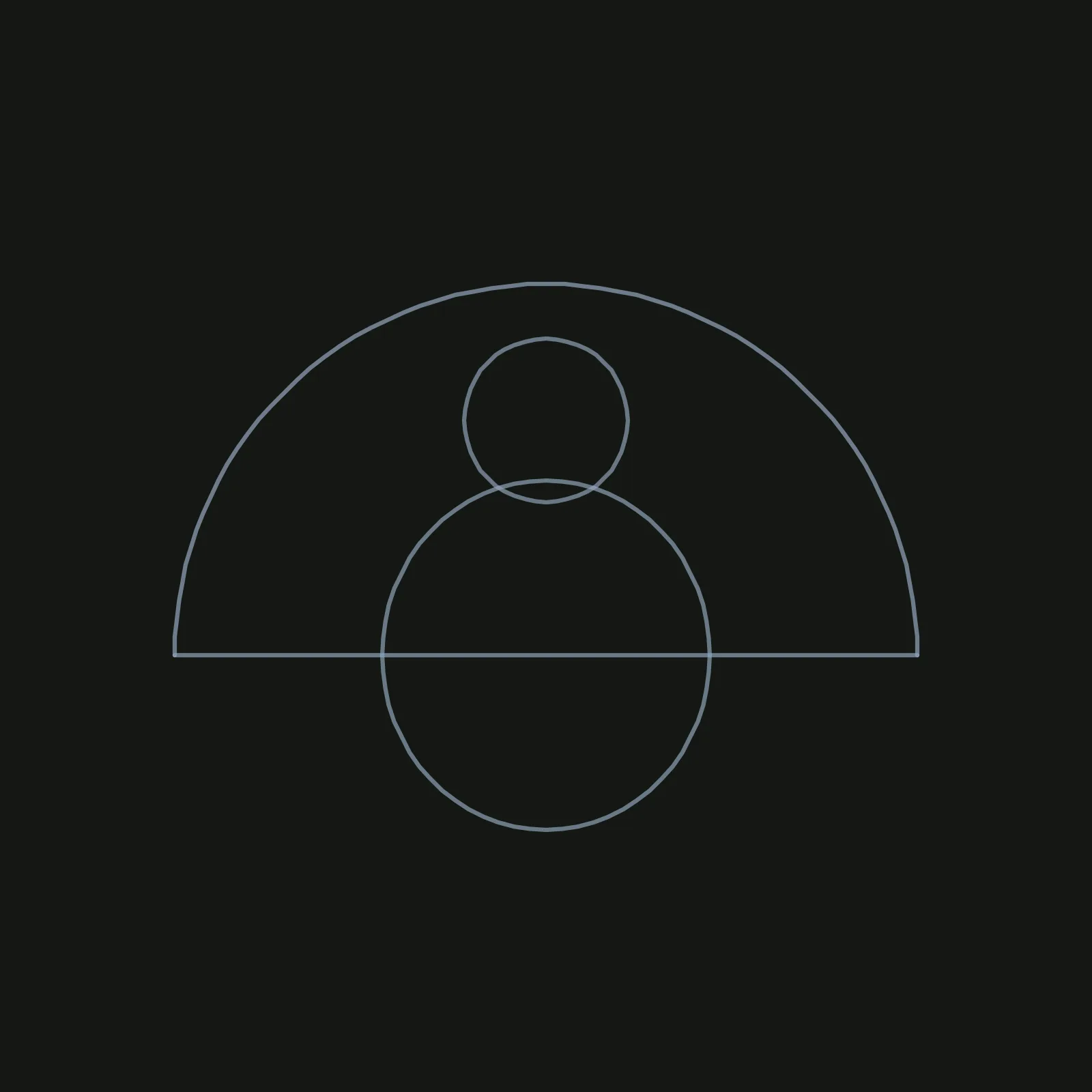
With a thin brush (width 2), draw a big half circle that takes up about two thirds of the canvas width, dome up, and close it with a straight line across the bottom a little below the middle of the canvas. Then, with the ellipse tool, draw a tall oval about a third of the canvas wide, centred on the middle of that flat line, half of it below the fan. Put a small circle on top for the head, about half the width of the body, overlapping the top of the oval a little.
The common mistake is a fan that is too small. The feathers should spread well past the body on both sides; if the fan is only a little wider than the body, the turkey looks like it is wearing a collar.
Step 2: Add the feathers and the feet
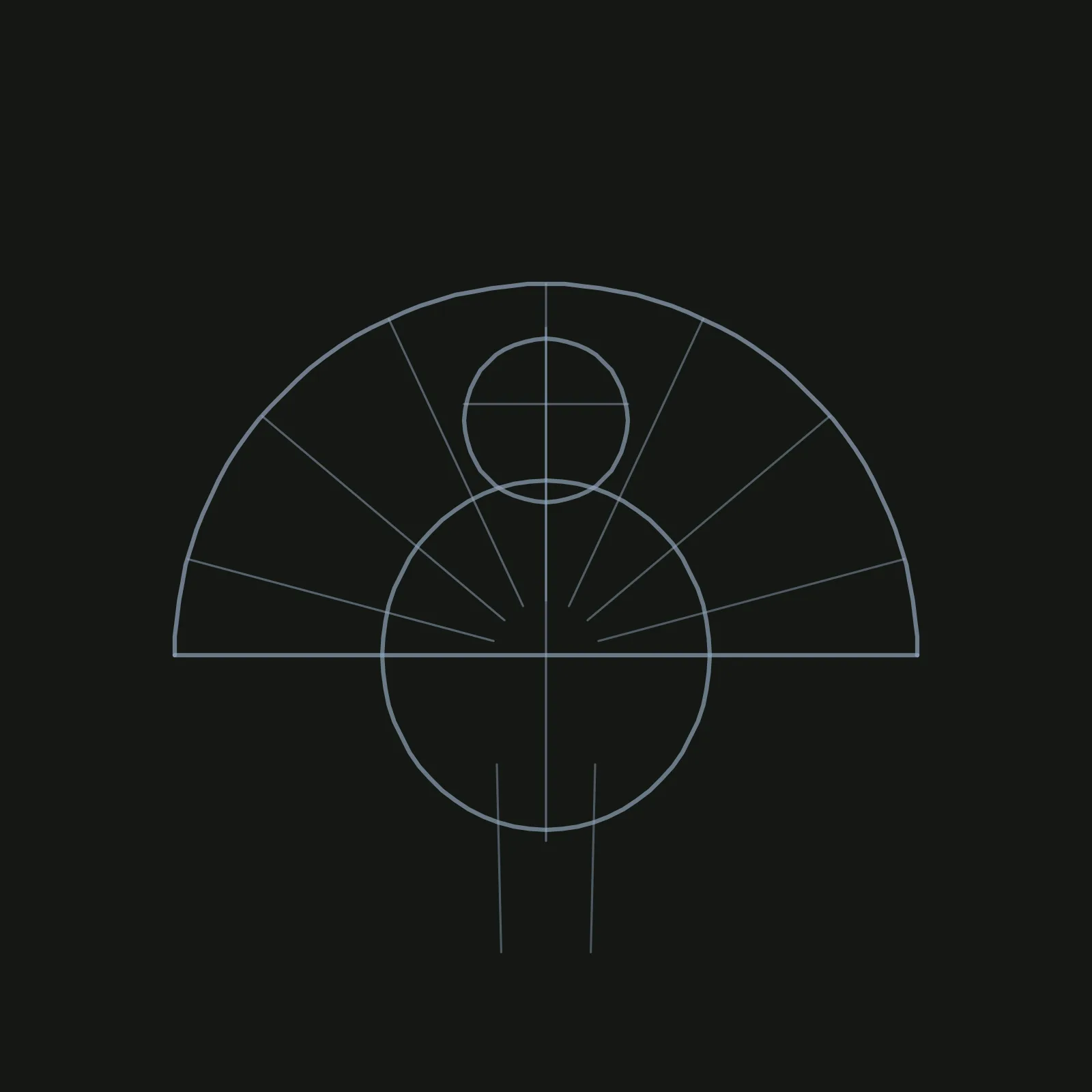
Switch to width 1. Draw a centreline straight down through the head and body, and a short eye line across the head just above its middle. Now draw seven spokes from the middle of the body out to the edge of the fan, spaced evenly like the ribs of an open hand fan: one straight up, and three on each side reaching down nearly to the flat line. Finish with two leg lines coming down from the bottom of the body, a little apart.
The mistake here is uneven spokes. Count three out from the middle on each side so the fan balances.
Step 3: Find the outline
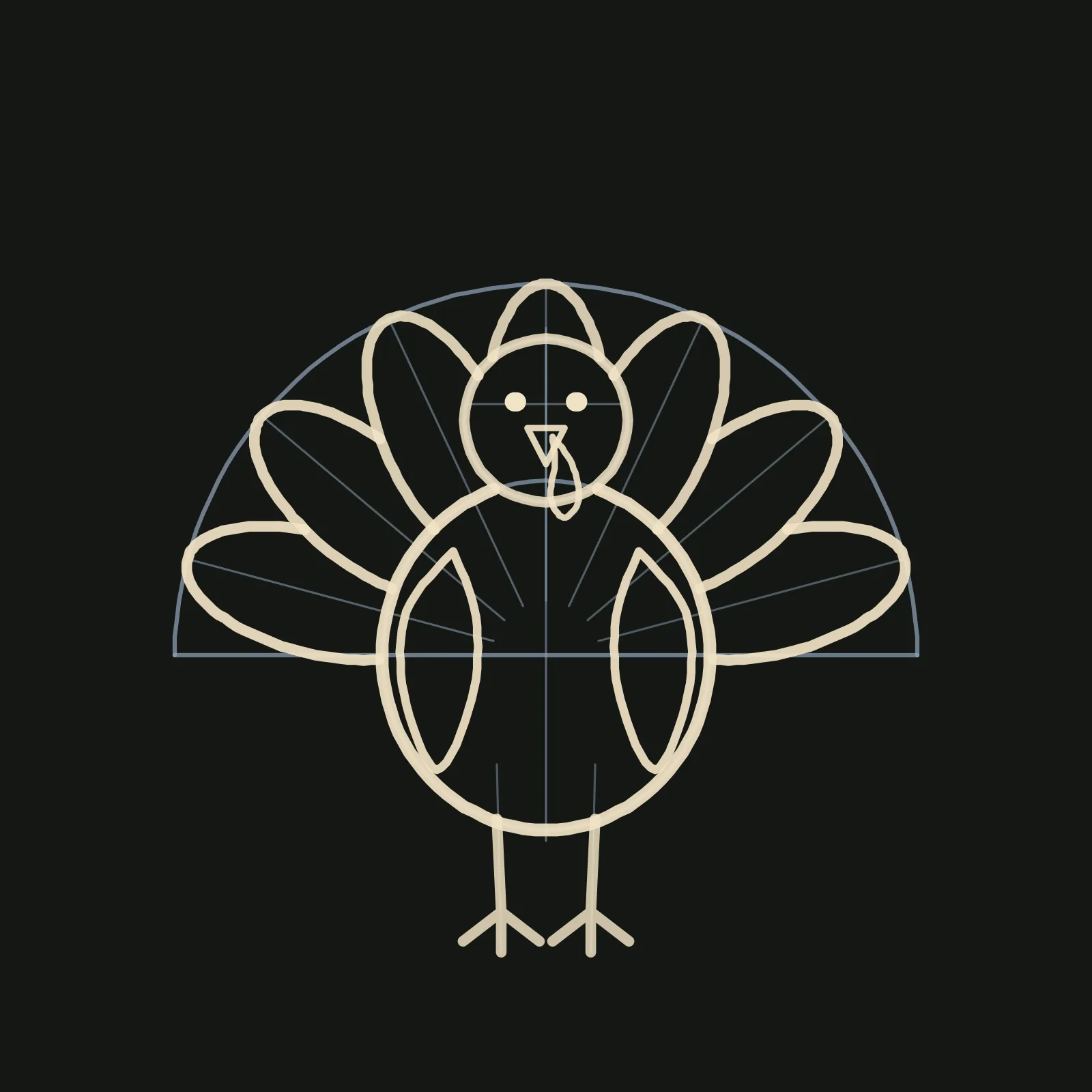
Pick a warm cream and the freehand brush at width 5. Draw a long rounded feather along each spoke, its tip just touching the edge of the fan. Stop each line where it meets the body, the head or the feather beside it, so the outer feathers tuck behind their neighbours. Trace the body, stopping where the head covers it, then the whole head. Inside the body, draw a long teardrop wing down each side. On the head, add two dots for the eyes on the eye line, a small upside down triangle for the beak and the wattle as a thin teardrop hanging from the beak down onto the chest. Draw each foot as one stroke: down the leg, then out along three toes.
The mistake is drawing every feather whole. Lines that cross behind the body turn it see through; only draw the parts you would actually see.
Step 4: Fill in the autumn colours
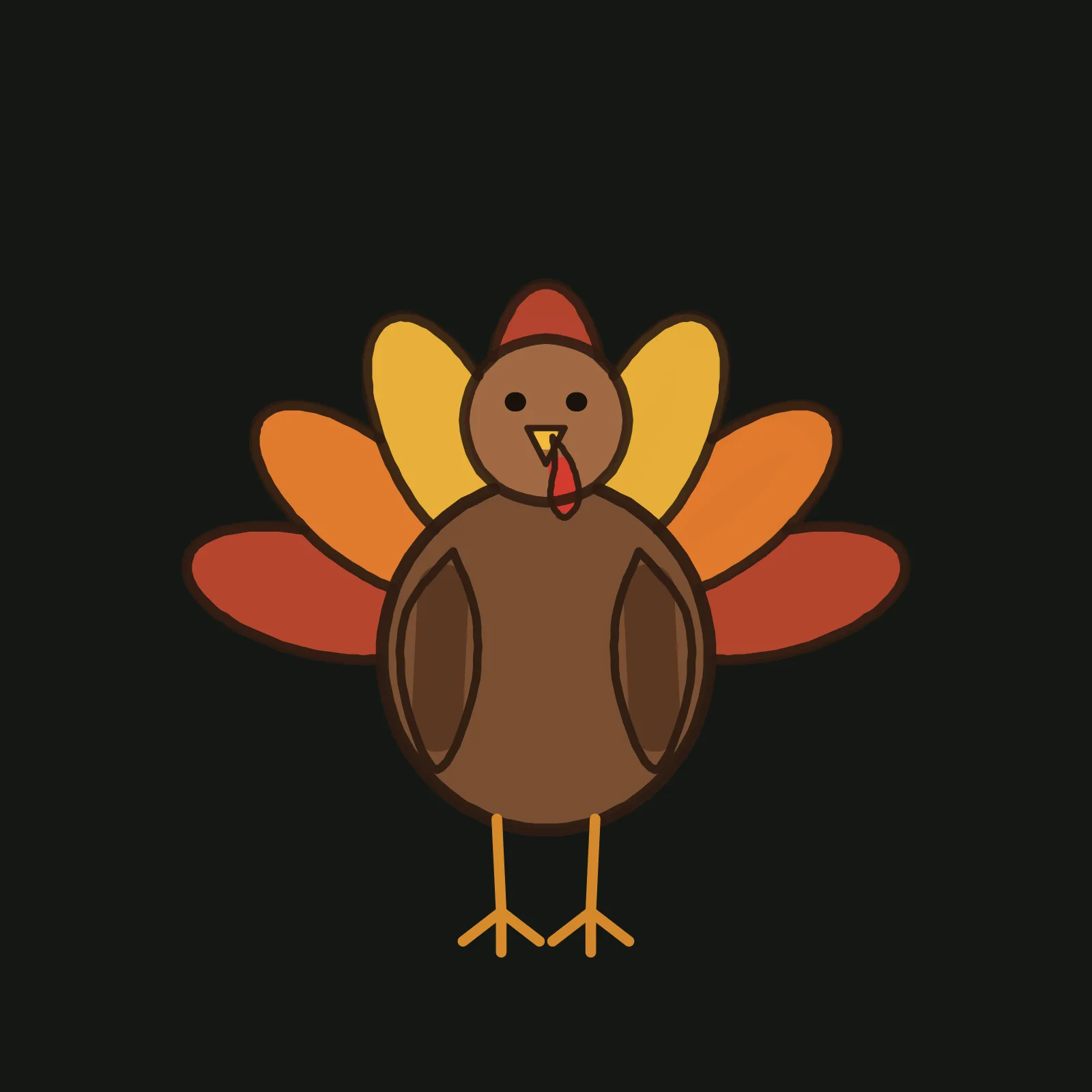
Open Layers and tap + Layer. The new layer sits above your sketch, and everything from here on goes on it. Colour the feathers in a pattern from the outside in: red on the outer pair, orange next, gold beside the head, and red for the middle one. For each feather, run one stroke at width 22 just inside its edge, then one wide stroke (width 44) down the middle. Fill the body brown with broad strokes at width 60, the wings in a darker brown, and the head in a lighter brown so it stands out from the body. Dab in a gold beak, a red wattle and near black eyes. Then redraw the outline in near black brown at width 5, and the legs and feet in orange.
When the new lines are down, delete the sketch: in Layers, tap the delete button on Drawing 1, the bottom layer, and confirm. The pencil guides and the first cream outline go in one tap, and nothing on your new layer is touched. That is why the guides live on their own layer: the eraser would nick every line a guide crosses.
The mistake here is one wide stroke per feather. A big round brush pokes out past a narrow rounded tip, so let the thinner stroke follow the edge.
Step 5: Add one shadow and one highlight
Pick the light: here it comes from the top left. In a dark brown at about 45% opacity and width 22, draw a curve just inside the right side of the body, from the shoulder round to the bottom. Do the same on the head with a narrower brush. In pale tan at width 8, draw a short curve just inside the upper left edge of the body and another on the head. Put a tiny white dot in the top of each eye, a glint on the beak, and a soft dark stroke on the ground under the feet.
Keep the shadow soft. At full opacity it reads as a stripe; at under half it reads as a round body turning away from the light.
Draw it yourself
Open the editor on grovetracks.com and draw a turkey of your own: give it more feathers or swap the autumn colours for blues and greens. For a head start, open any step's gallery page above and branch it to pick up from exactly that stage. Every step shows its lineage back to the first circle and fan, and the finished turkey's Made from section walks the whole tutorial.
Trace the finished turkey back to its roots, every step linked in one view: the turkey's lineage.
For another bird drawn the same way, How to Draw an Owl uses the same five step method, and How to Draw Light in Line Art has more on choosing where the light comes from.